


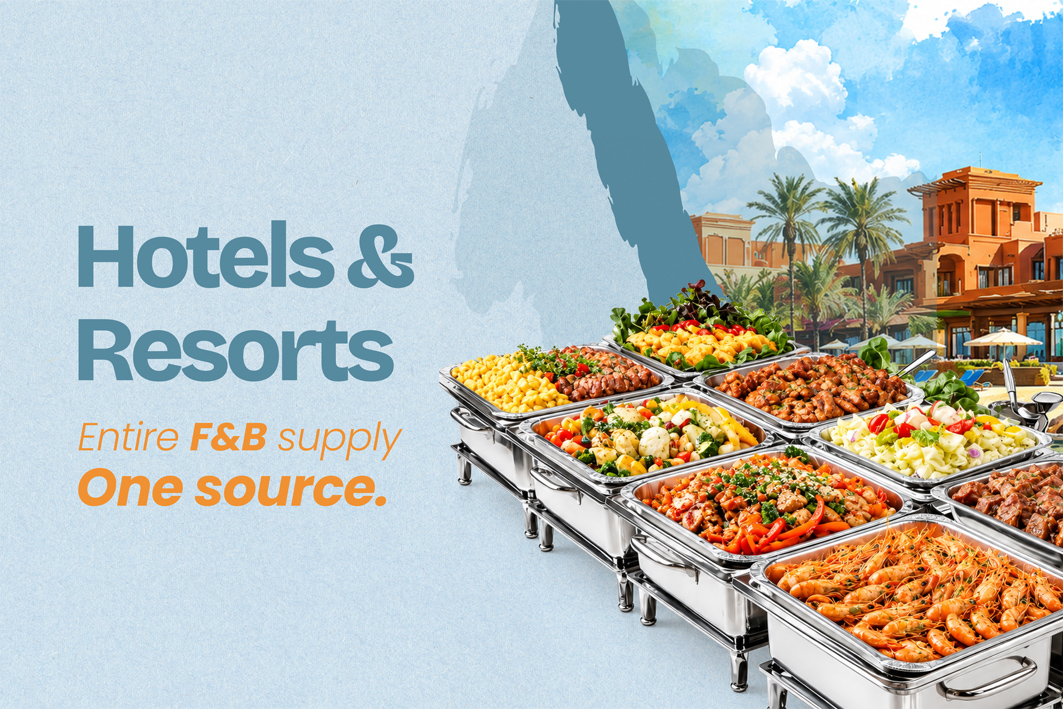
Hotel Food Supplier: How to Source Food and Beverage for Hotels and Resorts
If you’re a hotel food supplier — or the procurement manager choosing one — you already know the maths. A mid-size resort depends on eight to twenty separate suppliers: one for frozen seafood, another for cured meats, a third for cheese, a fourth for sauces. Each one means a separate purchase order, invoice, shipping documents, and relationship to manage when something goes wrong.
That supplier sprawl is one of the biggest hidden costs in hotel F&B procurement. It drains your team’s time, inflates your total landed cost, and makes consistency across properties almost impossible.
This guide maps out how hotels and resorts consume food — department by department — and shows how a single wholesale food supplier for hotels can cover your entire operation from one export source.
What Makes a Hotel Food Supplier Different from a Restaurant Supplier
A standalone restaurant sources for one menu. A hotel food supplier has to cover six, seven, sometimes ten different food and beverage operations under the same roof — each with its own format requirements, cost targets, and service rhythms.
A typical 200-room resort runs a breakfast buffet, an à la carte restaurant, a banqueting operation, room service, a pool bar, and a staff canteen feeding 120 employees per shift. Each pulls from a different slice of the same product catalogue — and the hotel that sources each category separately ends up drowning in logistics.
Department by Department: What Your Hotel Kitchen Actually Needs
Breakfast Buffet — The Daily Shop Window
Breakfast is where guests form their first impression of your food operation. It runs at high volume, with tight replenishment cycles, and demands visual variety.
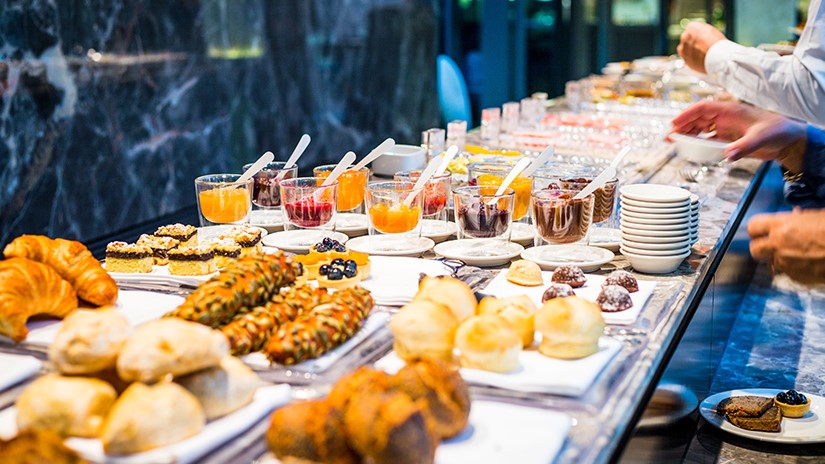
Key product categories for breakfast:
| Product | Format for Buffet | Why It Works |
| Sliced cheeses (gouda, edam, emmental) | Pre-sliced, interleaved | Zero prep time, consistent portion display |
| Ibérico and Serrano ham | Pre-sliced trays (80–100 g packs) | Controlled cost per tray, premium perception |
| Mozzarella | Fresh balls or burrata for display | Visual impact on the cold station |
| Churros | Frozen, oven-ready | Quick finishing, no fryer needed for looped churros |
| Yogurt | Individual portions | Portion control, no spoilage |
| Olive oil | Single-serve sachets (10 ml) or small bottles (250 ml) | Table-side or buffet station use |
| Sauces and condiments | Portion packs (ketchup, mayo, mustard) | No waste, hygienic for self-service |
Pro tip: A 3 kg block that needs hand-slicing every morning is a labour cost disguised as a product saving. Pre-sliced, interleaved sheets go straight from the walk-in to the buffet line. For a deeper look at cheese formats by channel, see our professional cheese portfolio guide.
Main Restaurant — Where Your Hotel Food Supplier Proves Its Range
Your à la carte restaurant is the hotel’s food credibility. This is where you need premium-grade proteins, artisan cheeses, and Spanish speciality ingredients that justify the price point.
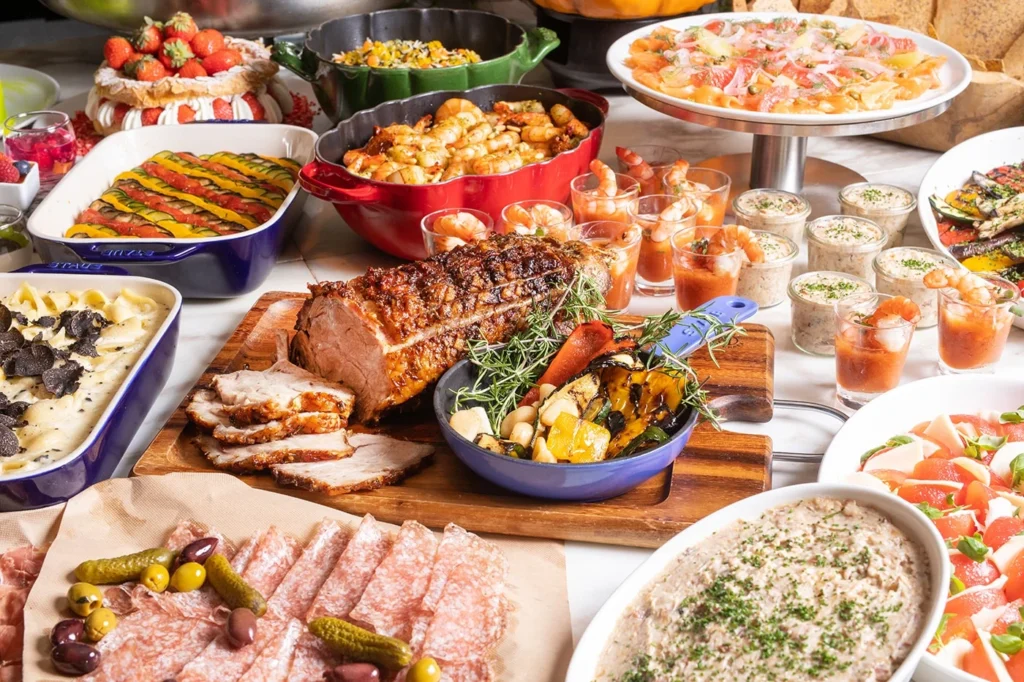
Proteins that perform on à la carte menus:
- Hake fillets — skin-on, pin-bone-out, in 60/120 g or 150/200 g portions. Consistent sizing means consistent plating and costing
- Salmon portions — IQF, individually vacuum-packed, ready for straight-to-pan cooking
- Ibérico pork presa and pluma — premium cuts that give your menu an unmistakable Spanish signature
- Black Angus beef — aged rib steaks, topsides, and cheeks for slow-cooked dishes
- Octopus — cleaned, pre-cooked options that cut prep time from two hours to fifteen minutes
The difference between a good hotel kitchen and a forgettable one often comes down to the supporting ingredients. Spanish vinegars — especially sherry vinegar DOP — give dressings and reductions a depth that generic wine vinegar cannot match. Read our Spanish vinegar sourcing guide for a full breakdown of vinegar types and their kitchen applications.
Banqueting and Events — Volume Meets Consistency
Banqueting is the most demanding operation for any hotel procurement manager. You need large volumes of identical portions, often at short notice, with zero inconsistency across 150, 200, or 300 covers.
- Portion-controlled proteins are non-negotiable. A hake medallion at 90–120 g, a salmon portion at 125 g, a chicken breast at 180 g — these ensure your cost per cover holds and every plate looks the same
- Pre-made desserts save your pastry team for showpiece items. Frozen cheesecakes, coulants (chocolate lava cakes), and brownies arrive portioned and ready to finish
- Cured ham boards for reception canapes use pre-sliced Ibérico or Serrano in tray formats. Our Spanish jamón guide breaks down the four Ibérico grades and which ones fit each price tier
- Frozen vegetables — pre-cut, blanched, and IQF — let you build sides and garnishes at scale
Room Service — Products That Travel Well
Room service is a margin game. The food has to survive a trip from kitchen to room without losing quality, and the menu has to work with minimal à la minute cooking during off-peak hours. Products that hold well: frozen burger patties, semi-cured and cured cheeses, Spanish croquettes in portions of 6 or 8, pre-packed cured meat boards, and single-serve sauces.
Pool Bar and Snack Service — Fast, Fried, and Fun
The pool bar is one of the highest-margin food operations in a resort — if you stock it right. Guests want fast, shareable, no-cutlery-required food.
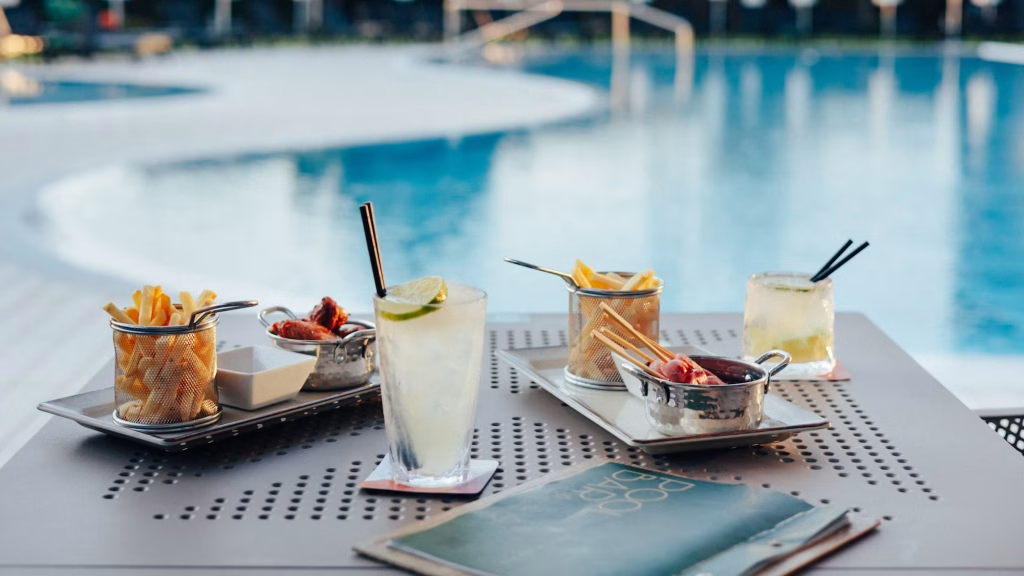
Top pool bar performers:
- Croquettes (assorted flavours: ham, cod, oxtail, blue cheese)
- Calamari rings and squid strips — IQF, ready to fry from frozen
- Pre-made empanadas and stuffed pastries
- Patatas bravas with portion-packed brava sauce and allioli
- Fried fish bites and tempura vegetables
Everything on this list comes out of the freezer and onto the plate in under five minutes. For more on the squid and calamari options available, see our guide on squid species and origins.
Staff Dining — The Budget Department That Still Matters
Staff meals are a cost centre, but a well-fed team performs better. The challenge is feeding 100+ employees per shift on a budget that might be a quarter of what you spend on guest food. Products that work: chicken leg quarters, frozen vegetables in bulk bags, dry pasta and rice, sauces in large-format containers (1.9 kg bottles, 5 L jugs), and frozen fifth-range products like portioned pork cheeks or confit cod.
The Format Matrix: Matching Products to Hotel Departments
One of the most common procurement mistakes in hotels is ordering the right product in the wrong format. A good hotel food supplier carries the same product in multiple formats so you can match each one to the right department.
| Department | Preferred Format | Why |
| Breakfast buffet | Pre-sliced, portioned, individual packs | Speed, hygiene, visual consistency |
| Main restaurant | Whole pieces, premium cuts, artisan formats | Chef control, tableside presentation |
| Banqueting | IQF portions, bulk packs, portion-controlled | Cost predictability, plating consistency |
| Room service | Ready-to-cook, portion packs, tray formats | Fast finishing, travel stability |
| Pool bar | Frozen ready-to-fry, snack-size portions | Speed of service, no skilled labour needed |
| Staff dining | Bulk formats, large-pack sauces, economical cuts | Lowest per-portion cost |
Getting the format right is often more important than getting the product right.
Why One Wholesale Food Supplier for Hotels Beats Ten Separate Ones
Most hotels don’t fail at product quality — they fail at supply chain complexity. When you source cheese from one country, seafood from another, sauces from a third, and cured meats from a fourth, you’re managing four sets of documentation, four shipping schedules, and four quality-control relationships.
What consolidation delivers:
- One container, mixed load — frozen, chilled, and ambient in a single multi-temperature shipment with one set of customs paperwork
- One invoice — simplified accounting, clearer cost tracking per department
- One quality standard — IFS Broker-certified supply chain with full traceability
- Consistent documentation — export certificates, health documents, and product specs in the format your market requires
For a broader look at the frozen product range, including seafood and meats, see our frozen food sourcing overview.
Practical Sourcing Tips for Hotel F&B Procurement
- Map your consumption by department. List what each department uses, in what format, and at what frequency. This tells your hotel food supplier exactly what to load and how to pack it
- Think in containers, not in orders. A 20-foot reefer holds roughly 20–22 tonnes. Combining your frozen proteins, cheeses, cured meats, and sauces into one load drops your per-kilo shipping cost significantly
- Align your ordering calendar with seasonal demand. Your supplier should be able to flex quantities without forcing you into rigid minimum orders year-round — contact us to discuss your seasonal pattern
- Request samples before committing to volume. This is especially important for items like pre-sliced cheeses, IQF seafood portions, and frozen desserts, where the format matters as much as the flavour
- Check shelf life against your rotation speed. A product with a 12-month frozen shelf life gives you flexibility; a chilled product with 60 days requires tighter planning
Why Source Through Spanish Boosting as Your Hotel Food Supplier
Spanish Boosting operates as a single export partner for importers, distributors, and hotel procurement teams who want access to Spain’s full food portfolio without managing dozens of producer relationships.
We consolidate frozen, chilled, and ambient products — from IQF seafood and portioned meats to artisan cheeses, Ibérico ham, sauces, olive oils, vinegars, and desserts — into single mixed shipments with one invoice, one set of export documentation, and one quality-certified supply chain.
Whether you’re supplying a single property or a chain of resorts, we build the product mix around your actual operation — department by department.
Get in touch and we’ll send you our personalised catalogue with the full hotel and resort product range, pricing, and specifications tailored to your operation.
Frequently Asked Questions
What should I look for in a hotel food supplier? Range depth across frozen, chilled, and ambient categories, the ability to consolidate into mixed shipments, proper export documentation, and food safety certifications like IFS Broker.
Can a single hotel food supplier cover all my F&B departments? Yes — if their catalogue is deep enough. Through Spanish Boosting, you can source frozen seafood, meats, cheeses, cured hams, sauces, olive oils, vinegars, frozen vegetables, prepared foods, desserts, and dry goods in one mixed shipment.
Can I order frozen, chilled, and ambient products in one shipment? Yes. We consolidate multi-temperature shipments in a single container with proper separation and temperature control — one import clearance, one invoice, one delivery.
What formats are available for hotel buffet service? Pre-sliced interleaved cheeses, portioned cured ham trays, individual yogurt pots, single-serve olive oil sachets, portion-packed sauces, and ready-to-finish pastries and churros — all designed for buffet display with minimal kitchen labour.
Do you supply portion-controlled products for banqueting? Yes. Our frozen range includes portion-controlled proteins (hake 90–120 g, salmon 125 g, chicken breasts), pre-portioned desserts (coulants, brownies, cheesecakes), and IQF vegetables for consistent plating across large events.
What is the minimum order for hotel food supply? It depends on the product mix and destination. Contact us to discuss your volume, and we’ll propose a container plan that fits your rotation speed and storage capacity.
Can you supply private-label products for hotel chains? Yes, across multiple categories including sauces, olive oils, and selected frozen products — especially relevant for hotel groups that want branded in-room products with their own label.
Are your products certified for international food safety standards? Spanish Boosting is IFS Broker certified. We provide all required export documentation, health certificates, and product specifications for your market.
Related Posts
Top 7 Reasons to Switch to Green Cleaning Products
Nowadays green cleaning products have emerged as a sustainable alternative to conventional household cleaners. These plant-based, cruelty-free, and biodegradable cleaning solutions offer numerous benefits, making them a wise choice for health-minded individuals and businesses alike. From reducing skin irritation and allergies to minimizing toxic chemical exposu
Latest Trends in Organic Cereals, Flours, and Breakfast Foods Market
Organic Cereals In recent years, the inclination towards health-conscious eating has significantly impacted consumer choices, with organic cereals leading the forefront. This shift is not just a fleeting trend but a substantial change in lifestyle choices, reflecting a deeper understanding of health and well-being. Growth in Organic Cereal Consumption The organ

Organic food for animals
Day by day increasingly more people are beginning to improve their diet by opting for organic products. Not only are they interested in taking care of their health but also that of their pets. Because pets do give us so much love and company! There are many who, tired of feeding their cats and dogs […]
Health problems related to industrial meat
Beyond the alarming figures which, according to GreenPeace, are connected to industrial livestock, responsible for 14.5% of Greenhouse Gas emissions worldwide and 80% for the deforestation of the Amazon, among other things, what negative consequences does the consumption of industrial meat have on human health? Let’s settle some doubts! The World Health Or